Penrhos at a Crossroads: The Debate Over Maes-yr-Rhos
There are few subjects that stir as much passion in local communities as housing developments and we are certainly no different here. On the one hand, the arguments for are compelling: we are living through a housing crisis, young people are struggling to get a foot on the property ladder, and governments—both in Westminster and Cardiff—have promised thousands of new homes, often with targets that councils are under pressure to deliver.
On the other hand, we are attached to the places we live. We value familiar landscapes, the space between houses, and the wildlife that shares our surroundings. Change, especially when it arrives in the form of a large housing estate, can feel like a threat to the very character of our community.
So, when Persimmon Homes submitted plans for 152 new houses on land behind the Maes-yr-Rhos estate in Penrhos, Ystradgynlais, it was little surprise that a backlash followed.
A Petition Takes Shape
Local resident Levi decided to act when he realised no one else was stepping forward.
“I started this petition because I couldn’t see anyone else taking the initiative. The councillors of our area, Huw Llewellyn and Sarah Williams, are objecting to this project too but Powys council hasn’t been all that helpful. Sometimes I think they only think about the money it’ll bring and not the larger picture and long-lasting effects it’ll have on our landscape. Is it a case of take it bit by bit until there’s nothing left?”
Within days, signatures began to mount up, and strangers messaged Levi to say, “this needs to be stopped.” The campaign has quickly become a rallying point for residents who fear that Penrhos will lose one of its most cherished green spaces.
What the Site Means
For campaigners, this patch of land is not an anonymous field but a living, breathing part of the community.
“This area is owned by the farmer,” Levi explains, “but it’s not only his land—it’s lived on by the local wildlife such as foxes, badgers, all manner of bird life. Barbastelle, Bechstein’s and other bat species are also found here, some of which are very rare and protected. It’s not only animals either—I forage here. This year has been exceptional for blackberries, elderberries and wild plums, all within this beautiful area they want to take away.”
For Levi and many others, the value of the land is ecological, cultural, and personal. It is about fox tracks as much as fruit picking; about a shared landscape as much as private gardens.
The Developer’s Case
Persimmon’s Design and Access Statement tells a different story. The site is already allocated in the Local Development Plan (LDP)—labelled “Penrhos School Extension, HA11.” From the council’s perspective, this is not unplanned sprawl but the continuation of a long-term housing strategy.
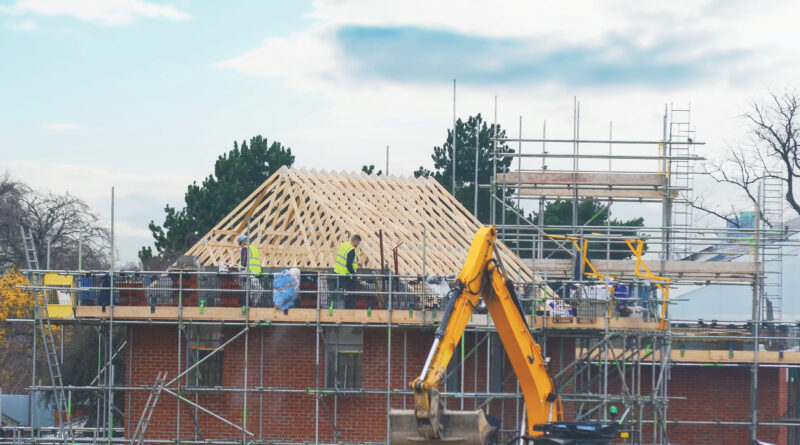
The proposals set out a neighbourhood of around 152 homes, with a range of sizes, landscaped spaces, sustainable drainage, and a central belt of trees retained as a design feature. Streets would be limited to 20 mph, with pavements and pedestrian links. The company frames the scheme as “sustainable growth,” helping to meet housing targets in Powys.
On traffic, the Transport Statement estimates one additional vehicle movement per minute at peak times, and modelling suggests the new mini-roundabout can cope easily. On sustainability, the Energy Report signals a shift towards air-source heat pumps, triple glazing, and solar PV to meet new building regulations.
In short, Persimmon argues: the site is allocated, the numbers stack up, and the design mitigates impacts.
Infrastructure Strain
Levi doesn’t accept that picture. His concerns go beyond traffic modelling and design statements. “Infrastructure-wise, the schools are currently overrun and cannot take any more children on. If they do, they’ll be hindering other children’s education and spreading resources too thin. Doctors are struggling; you wait days for an appointment, sometimes you don’t get through at all. Dentists are impossible unless you go private. The waiting lists are through the roof.”
He also points to sewage and drainage as a major flashpoint:
“When they applied for Phase One of the build, they did a survey on the water and sewer services and found they weren’t capable of dealing with 42 houses—never mind an additional 150. The valley is already having backlogs and floods in places where they’ve never happened before. It’s all adding strain onto our Victorian-era system.”
Welsh Water itself has acknowledged this in writing, telling Powys County Council that it is “unlikely sufficient capacity exists” in the local sewer network without a hydraulic assessment.
And then there is road safety:
“The roads are chaos every morning. There was a serious accident two weeks ago on the way out of Ystradgynlais into Abercrave. Near misses are becoming more frequent. You can do all the modelling you like, but people here see the reality every day.”
The Wider Debate on Housing
Not everyone will agree with Levi’s stance. Some will argue that more houses are always needed, particularly for younger people or those priced out of the market.
Levi acknowledges this point—but questions who truly benefits from developments like this:
“The argument that more housing is needed is a tough one because there will always be genuine people who actually need it. On the current development there are 0% housing association homes built. That tells me that in Phase Two they’ll push to have more housing association, which could possibly house people who have come to the area as immigrants.”
“Ask yourself this: if you paid £200,000 or £400,000 on a house, would you be happy to have that in your back garden? This isn’t racist at all, this is a serious question. The people they could house could have a completely different way of thinking and living to us and not a lot of it is in a positive way.”
It’s a controversial and candid statement. At its heart, it reflects a fear of change and unease about who new housing might bring. These sentiments surface in many communities, but they sit alongside other, more practical anxieties: from stretched services to congested roads.
To put this concern into perspective, the 2021 Census showed that in Ystradgynlais, 98.2% of residents were born in the UK—with only 1.8% born abroad. Across Powys, immigration levels are similarly low: the largest non-UK-born group is Polish residents, making up just 0.6% of the population, followed by Germans at 0.4%.
In other words, the number of incoming immigrant households in a rural area like Penrhos is likely to be very small, both in absolute and relative terms. The deeper issue is not immigration, but whether new developments genuinely serve local needs and integrate sensitively, without overwhelming a small community.
Population figures reinforce this point. Over the past decade, the population of Powys has grown by just 0.1%, just 200 people across the entire county. The pressure for extra houses is therefore not driven by immigration or a population surge, but by the way we now live: people generally live longer, more often alone, and with fewer people per household.
The Environmental Watchdogs
Into this debate step the statutory consultees. Natural Resources Wales (NRW) has not objected outright but insists on strict conditions. A sensitive lighting scheme must be drawn up to protect bats. A landscaping plan must ensure habitats are retained and enhanced.
Crucially, NRW echoes Welsh Water’s warning about sewage. Unless Persimmon can prove the local network can cope—or pay for upgrades—the scheme cannot be considered sustainable.
For campaigners, this is a vindication of their concerns. For Persimmon, it is another hurdle in a long approval process.
Growing Support
If Levi thought he might be alone, the petition has proved otherwise.
“Honestly, since I’ve started this petition all I’ve had is messages from completely random strangers saying this needs to be stopped. The petition is growing day by day, and hopefully we can stop this before it’s too late and we’ve lost another green space.”
In a matter of weeks, the campaign has brought together residents across Ystradgynlais who might otherwise never have met. It has tapped into a shared sense that Penrhos is being chipped away—“take it bit by bit until there’s nothing left,” as Levi puts it.
You can view and sign the petition at www.change.org, we would love to hear your thoughts on the development in the Ystrad Mag.