
The Stormy Season: How Autumn reshapes Gower beaches
After summer’s calm, the first Atlantic lows roll in and Gower changes gear. Swell periods lengthen, winds turn stronger and more frequent from the southwest, and higher “equinox” tides let waves reach further up the shore. The result is a fast, visible makeover of our beaches. If you know what to look for, you can watch the coast re-draw itself week by week.
Summer beach, winter beach
In summer, smaller waves tend to build the beach. Sand is pushed onshore to form a higher, flatter profile with a dry ridge near the top called a berm. Autumn and winter bring larger, steeper waves that have more energy in the backwash. That energy pulls sand offshore, cutting a sharper step at the waterline and carving deeper rip channels. Offshore, the sand is parked in shallow bars that help break the next set of waves. Through late autumn you will often see a lower, steeper beach with patches of exposed rock or old peat where sand has been stripped away.
Longshore drift at Port Eynon
Stand on the seawall at Port Eynon and watch the sets come in at an angle. When waves hit the shore diagonally, they push sand and shingle along the beach in the direction the wave fronts are travelling. This is longshore drift. On south Gower, the prevailing swell usually pushes material eastward within bays. At Port Eynon that can mean sand migrating toward Horton, feeding the inner curve of the bay and, during stormy spells, leaving more cobble and shell grit in front of the village. After calmer spells, sand creeps back and smooths over the coarser layer. Storms can also nibble at small spits and banks near the stream mouth, then rebuild them later in the season.
Tip for photos: pick a mid-tide, face along the beach, and shoot the “saw-tooth” pattern where swash and backwash meet. A slow shutter on a phone night mode will show the diagonal movement as soft streaks.
Sand on the move at Three Cliffs
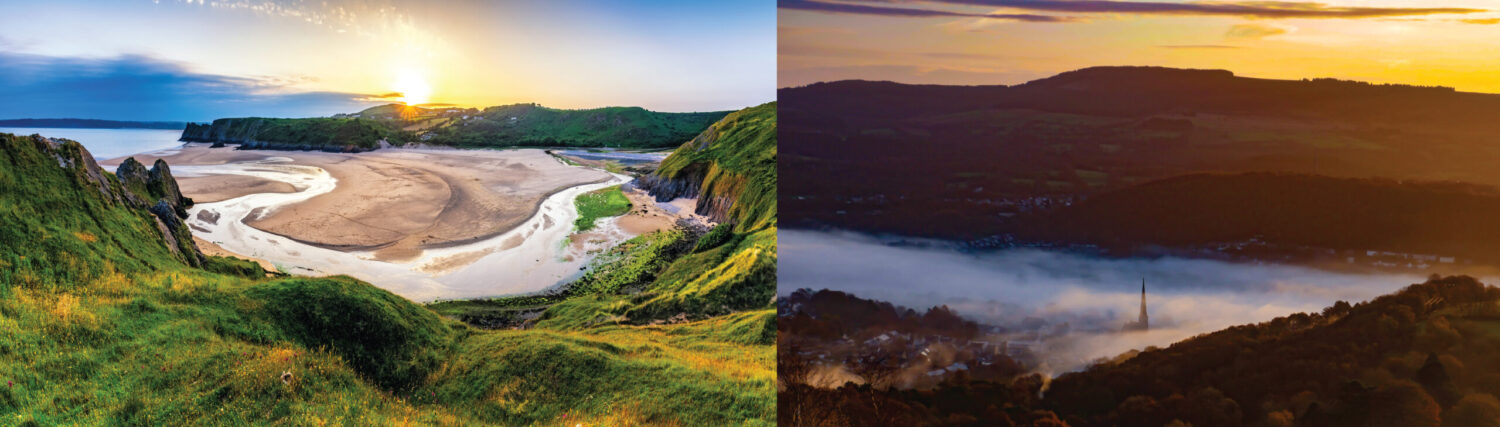
Three Cliffs Bay is a natural classroom. The tide sweeps around the headland, the Pennard Pill cuts its channel through the sand, and the wind works the back beach and dunes. In late summer the beach is often smooth and featureless. As autumn sets in, the river channel starts to wander, cutbanks appear, and shallow sandbars grow and shift across the mouth. Big tides and swells can strip the upper beach and expose the stone ribs near the base of the cliffs. A fortnight later, calmer swell may lay a fresh blanket of sand and hide them again.
From the clifftop path you can sometimes pick out the classic “bar and rip” pattern. Water pours off the beach through rip channels between bars. That water is simply trying to get back out to sea after the surf has piled it up. It is one reason autumn brings an uptick in rip currents. Swimmers and paddleboarders should pick sheltered days and stay well inside lifeguarded areas where available.
Dunes: living sea walls that need care
Gower’s dunes are not a backdrop. They are natural flood defences and wildlife habitat. In storm season they get a pounding. Waves reach the dune toe on high tides and cut a clean, steep face called a scarp. Marram grass responds by trapping wind-blown sand on calmer days and slowly rebuilding the front. Footfall can undo that repair work. Repeated shortcutting over the lip kills the grass, opens blowouts, and funnels more sand inland.
That is why you will see rope lines and chest-high fencing at sensitive spots. They are not there to spoil your view. They are there to give the plants a breather so the dune can do its job. Stick to waymarked paths and boardwalks. If a path is soft, walk single file. Avoid sliding or sandboarding on recovering faces. Small choices add up over the storm season.
Why autumn feels different
Three ingredients line up. First, longer fetch and stronger winds across the Atlantic build longer-period swells that carry more energy to the shore. Second, autumn brings more frequent low-pressure systems, so there are fewer calm recovery days between wave events. Third, higher spring tides around the equinox let waves cross further up the beach to erode the berm and reach the dune toe. Put together, change happens faster, and it happens higher on the beach.

